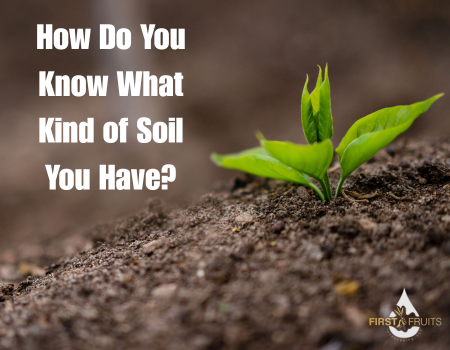
If you are new to the basic elements of landscaping, you may not be aware that dirt can be very different in different areas. And the condition of your dirt can play a huge role in how successful growing certain items is. Some soil/dirt can hold onto water like a sponge, while others may be able to retain very little as it drains away rapidly. Knowing what type of soil you have will help you to know how to maintain your yard and what will grow there the most successfully.
How Do You Know What Kind of Soil You Have?
There are four ways that you can test your soil to determine what kind of dirt is in your yard. This will help you to create a launching point to keep your landscape healthy and thriving.
The jar test
This test helps you to have a clear picture of what is inside your dirt. This method separates soil into layers to show you what you’re working with.
For this test, you will need a clear container. Most people use a mason jar, and this is why it is called the jar test. You will also need a garden towel, water, dish soap, a strainer, a bucket, a tape measure, and a marker.
Dig 6 inches into your landscape and collect dirt from the root zone. Get the strainer and place it over a bucket, and push the soil through to break it up and remove any rocks that may be hanging out in the soil. Sift through the soil and fill your jar halfway with the sifted soil. After the jar is half full of soil, fill it to 3/4 full with water and then add a tablespoon of dish soap.
Once all of this is in the jar, close the lid tightly and shake the jar well for 2 to 3 minutes until the soil mixes thoroughly with the water and the soap. Then place the jar on a flat surface and let all of the soil settle back to the bottom. If there’s silt, it will settle in the middle after a few hours, and if there is clay, it will form on the top. You can mark each section you see on the side of the jar with a marker. This will help you to make some simple calculations to determine the percentages of each layer.
Squeeze test
For this most simple of tests, you will need a garden trowel/small shovel and a spray bottle. Start by digging 5 to 6 inches into your dirt and then moisten the soil like dough using your spray bottle. Squeeze the soil firmly in between your hands and see how it reacts. If the soil falls apart immediately, it is sandy. If the soil keeps its shape but crumbles when you poke it, it is loamy. If the soil doesn’t crumble at all when poked, it is clay.
Ribbon test
This is the practice of making a ribbon out of moist dirt. The length of the ribbon shows whether the dirt is sandy, salty, or clay. For this test, you need a spray bottle, measuring tape, and a shovel.
Start by digging 6 inches into your dirt and take a small amount from that depth. Get the soil moist with the spray bottle and roll it into a ball about half an inch in diameter. When the soil is no longer sticking to your hand as you form the ball it is ready to test. At this point, you will need to squeeze the soil between your thumb and four fingers to form a ribbon and keep pressing it until the ribbon breaks. It is suggested to do this at least three times, forming the ball and a ribbon to ensure that your test is accurate. Once you have formed your ribbon, measure it. If it breaks immediately and is gritty like sugar, it is sandy. If it is smooth and slightly sticky and less than an inch long, it is sandy loam. If it is one to 2 inches, sticky, and holds its shape. It is clay loam. If it is more than 2 inches and sticky and firm, it is clay.
Drainage test
The drainage test shows you if your dirt is sandy or more clay-like. You will need a shovel, measuring tape, bucket, and a stopwatch. Dig a hole 12 inches deep and 12 inches wide. It is best to form vertical straight walls for this as much as possible to make sure water is draining evenly. Fill your hole with water and allow the water to drain out overnight. This will take approximately 5 gallons of water. Refill the hole again the next morning and note the time that you start. Now start your watch and time how long it takes the hole to drain completely. The drainage rate will help you determine what type of soil you have. The longer it takes to drain, the more clay the soil has. If it is draining quickly, it is more sandy.
If you need help with your landscape, especially when it comes to designing a great landscape that looks amazing and works well with the soil already in your land. It is a good idea to consult the expertise of a landscaping professional.
If you want to take your yard and garden from great to amazing, contact the landscape designers at First Fruits Landscaping. Let’s get started turning your yard into a work of art that not only looks great but also functions well for your lifestyle. We provide landscaping services in Snohomish County and King County.